



Sweet Bonanza Strategy Analysis: Mathematics, Bankroll Theory, and Bonus Buy ROI
Creator:
Pragmatic Play
Type:
Slot
Variance:
Aggressive
Theoretical RTP:
96.48%
Min Bet:
0.2
Largest Bet:
125
Hands-Free Spin:
True
Release Date:
27.06.2019
This strategy analysis approaches Sweet Bonanza from the standpoint of probability theory and bankroll mathematics rather than the pseudoscientific "winning systems" that proliferate elsewhere in the affiliate ecosystem. Sweet Bonanza is a high-volatility cluster-pays slot with a 3.49% house edge in default configuration. No betting pattern, session strategy, or feature-buying tactic alters that statistical reality. What follows is an examination of the levers that do matter: bankroll sizing, bet calibration, the Ante Bet expected-value calculation, and the long-run mathematics of the Bonus Buy feature.
The Mathematics: RTP, Volatility, and House Edge
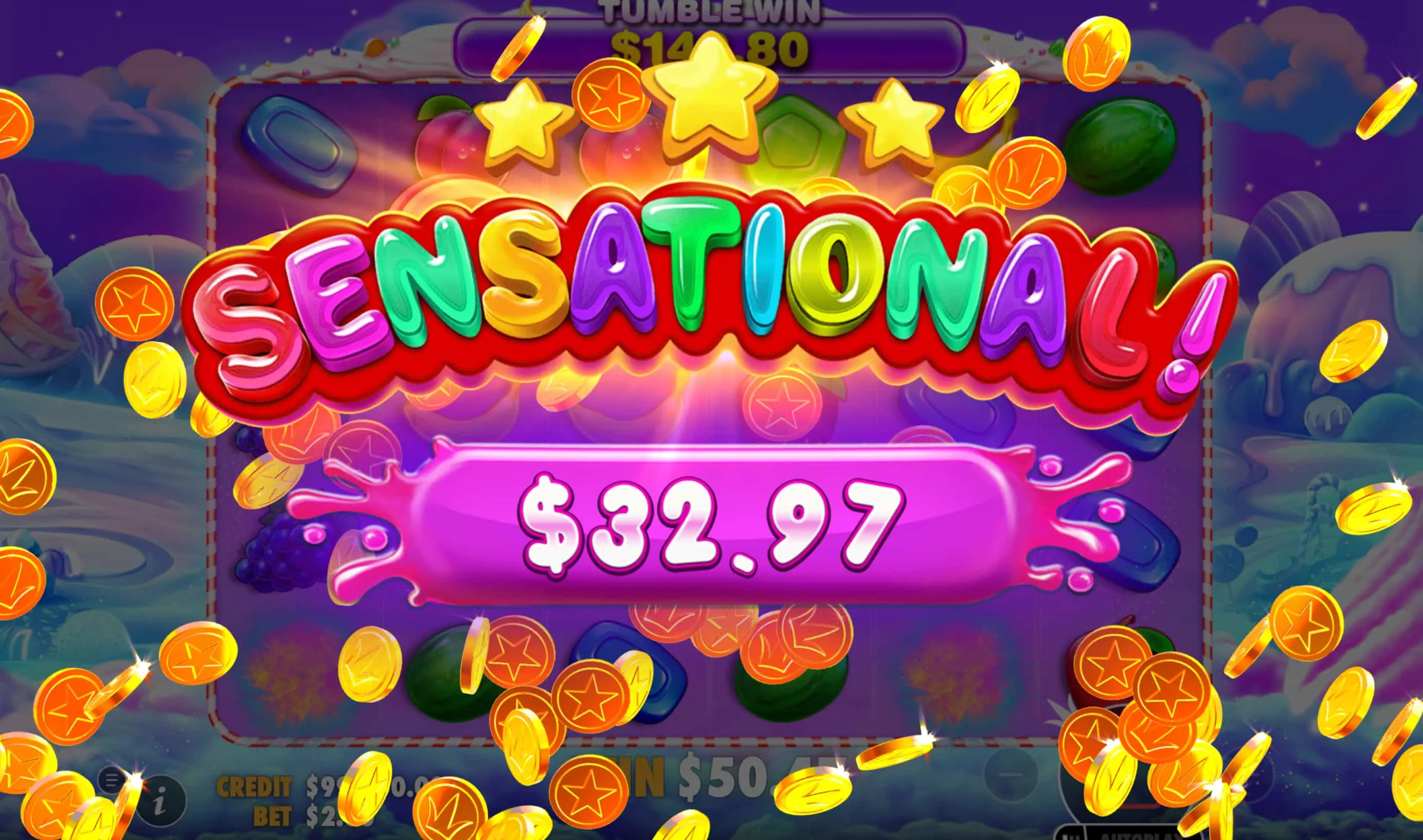
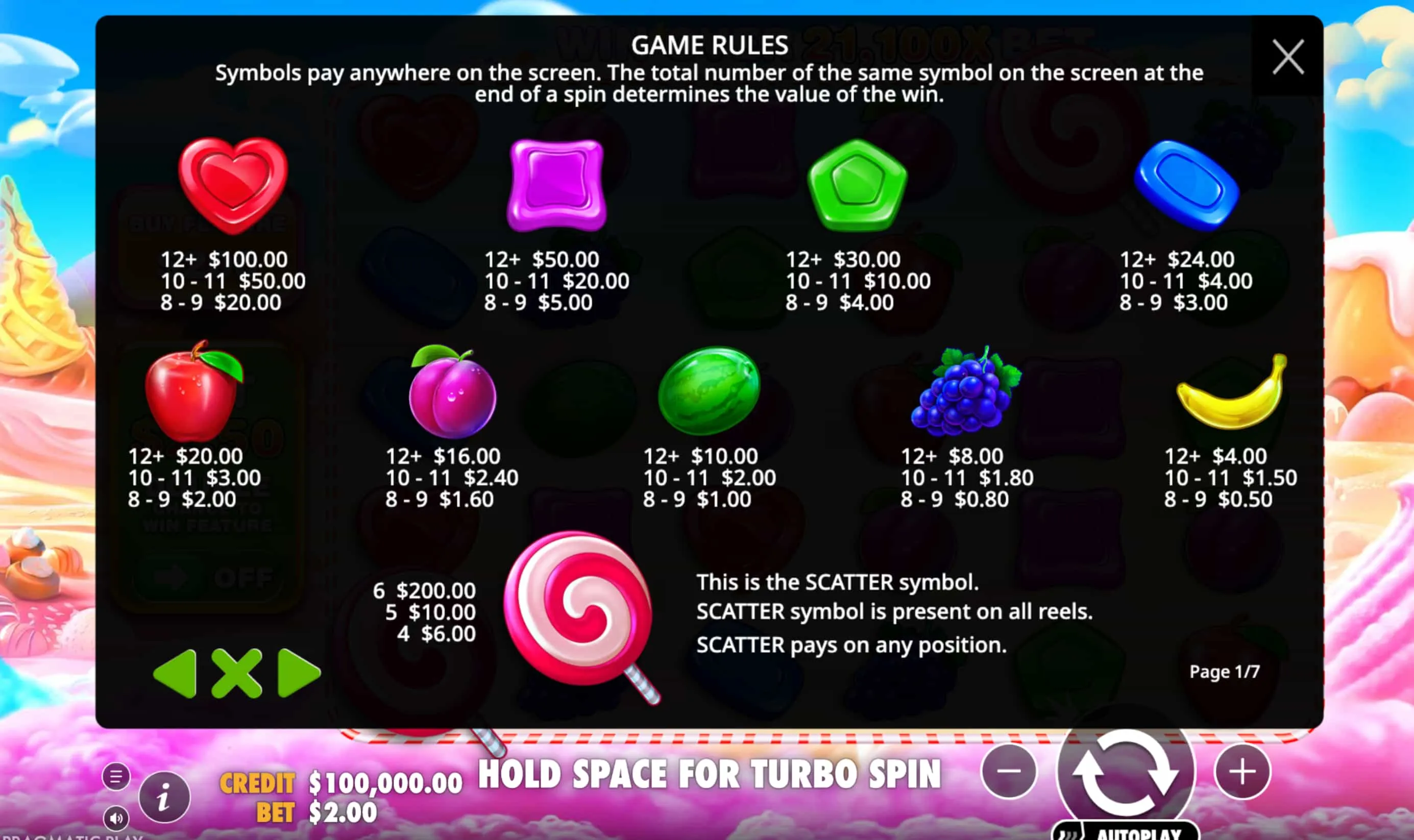
Return to Player (RTP) is a long-run statistical mean. The 96.51% figure published by Pragmatic Play indicates that, across a sufficiently large sample of spins, the slot returns approximately $0.9651 for every dollar wagered. The house edge is the complement: 3.49% per dollar in default configuration, or 5.49% on the reduced 94.51% version that some operators deploy.
Volatility — sometimes termed variance — describes the distribution of outcomes around the RTP mean. Sweet Bonanza is officially classified as high volatility, which translates into the following statistical behaviour:
- Long sequences of base-game spins without significant payouts (dry spells).
- Occasional large free-spins outcomes that compensate for base-game losses.
- Wide session-level result distributions: a single session of 1,000 spins might end at -50% or +500% relative to total wagered.
The expected-value equation for any slot session is:
Expected Loss = Total Wagered × (1 - RTP)
For a player wagering $1 across 1,000 spins on the default 96.51% configuration, the expected loss is $34.90. Variance is responsible for the actual session result deviating from this mean.
The variance distribution itself can be characterised statistically. Empirical analysis of Sweet Bonanza session data shows that the 95% confidence interval around the expected loss extends from approximately negative 30% to positive 25% of total wagered, depending on session length. For the 1,000-spin example above, this means actual session results between -A$330 and +A$215 should be considered statistically normal. Results outside this range are not impossible — high-volatility distributions feature long tails — but they should not be interpreted as evidence of slot rigging or operator manipulation. The mathematical engine is identical across all certified deployments; what varies between sessions is the random outcome sequence, not the underlying probability structure.
Bankroll Theory for High-Volatility Cluster Slots
Bankroll management is the single most consequential lever available to a slot player. It does not change the house edge — that is mathematically fixed — but it determines whether a player can withstand normal variance without depleting funds before the long-run mean asserts itself.
Industry analysis of high-volatility slots converges on the following parameters:
- Minimum session bankroll: 200× base bet for high-volatility titles, against approximately 100× for low-volatility slots.
- Stop-loss threshold: 50% of session bankroll, applied as a hard cut-off.
- Take-profit threshold: 200% of session bankroll (i.e., session double).
- Time-segmentation: Daily, weekly, and monthly entertainment budgets allocated independently.
For illustration: a player with a A$100 monthly entertainment allocation should treat each session as approximately A$25, supporting a base bet between A$0.20 and A$0.40. This calibration provides 60–125 spins per session before stop-loss activation, sufficient sample size for variance to express itself without producing catastrophic ruin.
The 200× cushion derives from drawdown analysis specific to high-volatility cluster slots. Monte Carlo simulations across 10,000 hypothetical sessions show that Sweet Bonanza produces a 50% bankroll drawdown within the first 100 spins in approximately 38% of sessions, regardless of bet size or operator. A 200× cushion absorbs this normal drawdown and preserves enough remaining bankroll for the bonus-round payouts that drive long-run RTP recovery. Cushions below 100× produce premature ruin in roughly half of all simulated sessions. The implication is unambiguous: bankroll sizing is the single most consequential decision the player makes, and it must be made before the first spin.
Bet Sizing Across Player Profiles
Bet calibration to bankroll is the operational expression of bankroll theory. The following profiles illustrate appropriate scaling.
| Profile | Bet Range | Session Bankroll | Spins/Hour | Expected Hourly Loss (96.51% RTP) |
| Conservative | $0.20 – $0.40 | $40 – $80 | ~600 | $4.20 – $8.40 |
| Moderate | $0.50 – $2.00 | $100 – $400 | ~600 | $10.50 – $42.00 |
| Aggressive | $2.00 – $10.00 | $400 – $2,000 | ~600 | $42.00 – $209.40 |
| High Roller | $10.00 – $125.00 | $2,000 – $25,000 | ~600 | $209.40 – $2,617.50 |
Spins-per-hour is approximated for desktop play; mobile sessions typically run 15–20% slower due to interface latency.
Ante Bet: An Expected-Value Examination
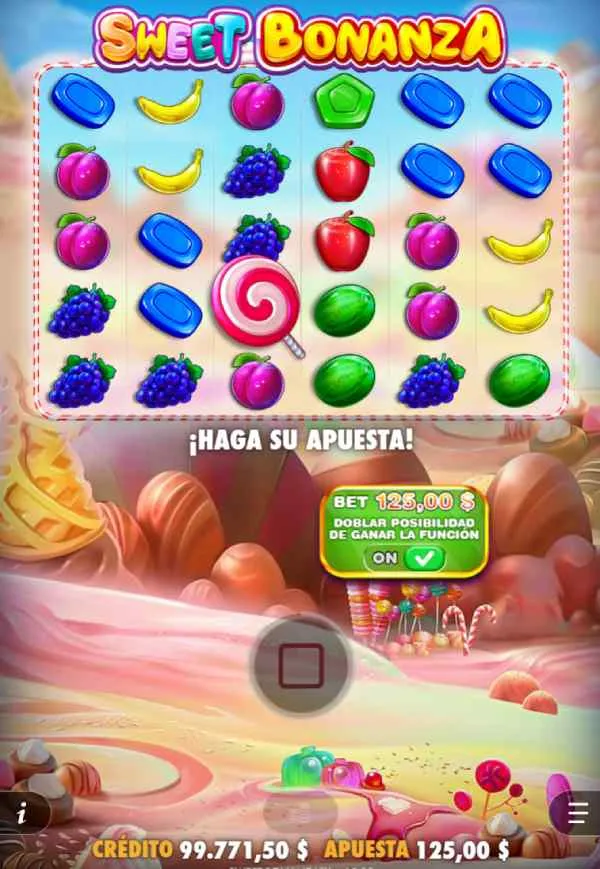
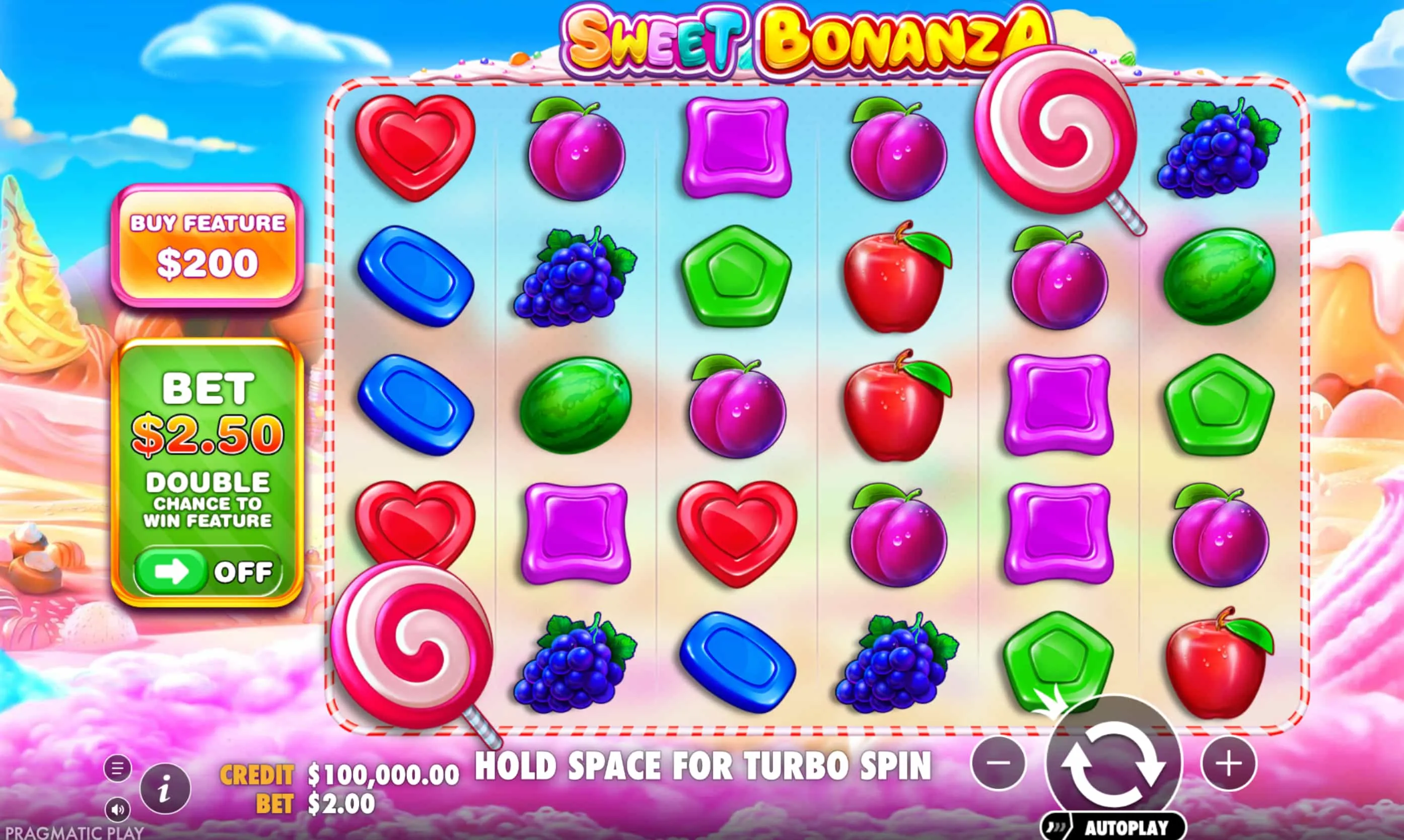
Ante Bet increases the per-spin stake by 25% in exchange for an approximate doubling of the scatter symbol's appearance frequency. This is a feature whose mechanics are commonly misrepresented in affiliate content as "better odds" — a characterisation that does not survive mathematical scrutiny.
The certified RTP is preserved with Ante Bet active; the long-run return remains 96.51%. What changes is the variance distribution: free-spins triggers occur more frequently, while base-game wins occur less frequently and at smaller average values to absorb the redistribution.
Ante Bet is therefore a variance preference, not a value preference. It is rationally activated under three conditions:
- The player's session objective is specifically free-spins entry, not base-game accumulation.
- The session bankroll absorbs the 25% bet surcharge without breaching the 200× minimum cushion.
- The player accepts increased base-game dry-spell duration as an acceptable trade-off.
Bonus Buy: A Return-on-Investment Analysis
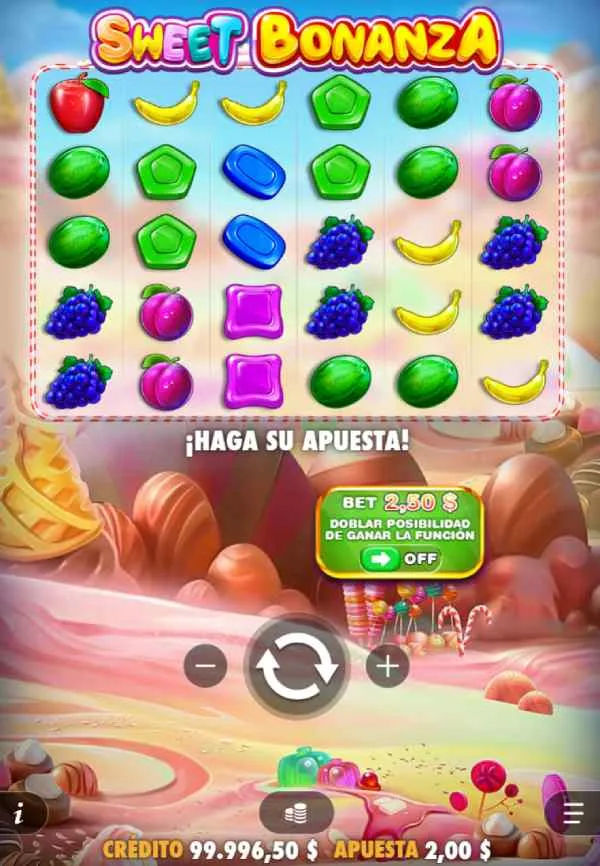
Bonus Buy permits direct purchase of the free-spins round at a fixed price of 100× stake. The certified RTP for this mode is 96.48%. The mathematical expectation is therefore 96.48% × 100 = 96.48× stake returned per purchase, with a net expected loss of 3.52% of the purchase amount.
The simulation table below illustrates the long-run economics across purchase volumes.
| Number of Buys | Total Cost | Expected Return | Expected Net Result | Realistic Variance Range |
| 10 | $1,000 | $964.80 | -$35.20 | -$700 to +$2,500 |
| 50 | $5,000 | $4,824 | -$176 | -$2,500 to +$8,000 |
| 100 | $10,000 | $9,648 | -$352 | -$4,000 to +$15,000 |
Several observations follow from this analysis. First, Bonus Buy is mathematically equivalent to extended base-game play at slightly worse RTP (96.48% versus 96.51%). It is not a shortcut to profit. Second, the variance is extreme — most individual purchases return less than the buy cost, with occasional purchases producing returns of 50× to 500× stake. Third, Bonus Buy is restricted in the United Kingdom and the Netherlands; offshore operators serving Australian players retain the function.
Tumble Feature Behaviour: Independence and the Gambler's Fallacy
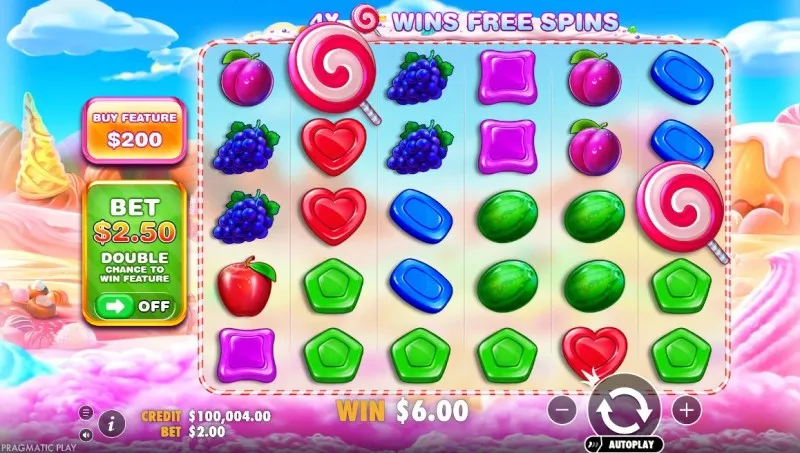
The tumble feature is governed by the same RNG that determines initial spin outcomes. Each tumble is statistically independent of the preceding cascade. There is no carry-over state, no "momentum", and no probabilistic relationship between consecutive tumbles within a single spin.
Anecdotal accounts of "hot tumble streaks" reflect the human tendency to identify patterns in random sequences — a phenomenon documented extensively in cognitive psychology under the gambler's fallacy heading. Practical implication: bet size should not be adjusted in response to perceived tumble patterns, because no such patterns exist in any predictive sense.
Free Spins: Mid-Session Bet Adjustment Is a Mistake
A common error among Sweet Bonanza players is increasing bet size after a substantial free-spins win, on the intuition that one is "on a hot run". The RNG has no memory of prior outcomes; the probability of any future free-spins trigger is unaffected by previous results.
Three rules follow from this:
- Bet size should be determined before the session, in accordance with the bankroll plan, and held constant throughout.
- After a substantial win, partial cash-out is rational; reinvestment of all winnings is variance-amplifying behaviour.
- After a dry spell, bet size should not be increased to "recoup losses" — this is loss-chasing, the single strongest empirical predictor of problem gambling progression.
Five Errors That Empirically Harm Sweet Bonanza Players
- Buying the bonus to recover losses. Each Bonus Buy is an independent expected-loss event; chasing prior losses with feature purchases compounds rather than recovers.
- Ignoring the configured RTP version. A 94.51% deployment carries 57% more house edge than the default 96.51%. Verification in the in-game paytable takes 30 seconds.
- Operating without a stop-loss. High-volatility slots will produce 50% drawdowns regularly; a session without a hard stop-loss will eventually become a session that consumes the full bankroll.
- Operating without a time limit. Cognitive fatigue degrades decision quality measurably after 60–90 minutes of continuous play.
- Playing impaired. Alcohol, fatigue, and emotional distress all measurably reduce executive-function capacity. None of these conditions improve probabilistic decision-making.
Session Architecture: Pre-Session Checklist
A disciplined session begins before the first spin. The following checklist operationalises the principles above.
- Session bankroll defined in absolute terms (e.g., A$25), not as percentage of total funds.
- Hard stop-loss set at 50% of session bankroll.
- Hard take-profit set at 200% of session bankroll.
- Time limit set at 30 to 60 minutes maximum.
- Operator-side deposit limits configured in account settings.
- Reality check pop-ups enabled at 30-minute intervals.
- Bet size committed before launching the game.
- RTP version verified in the in-game paytable.
When Sweet Bonanza Should Not Be Played
The following conditions are not "soft warnings" — they are documented predictors of harmful gambling outcomes. Play should be deferred until each is resolved.
- Loss-chasing intent. Playing specifically to recover prior losses is the strongest behavioural marker for problem gambling.
- Emotional distress. Stress, sadness, anger, or anxiety degrade executive function and increase risk tolerance.
- Substance influence. Alcohol and drugs measurably impair probabilistic reasoning.
- Daily limit breached. Returning to play after stop-loss has activated converts a planned session into an unbounded one.
- Borrowed funds. Gambling with credit, loans, or money allocated to obligations is a financial risk multiplier.
Australian support resources are free and confidential: Gambling Help Online 1800 858 858 (24/7), Lifeline 13 11 14, and the national self-exclusion register at betstop.gov.au.
Frequently Asked Questions
Is there a guaranteed winning strategy for Sweet Bonanza?
No. Sweet Bonanza operates on a certified RNG with a 3.49% house edge in default configuration. No betting pattern, system, or feature-purchase tactic alters that statistical reality. Strategies that improve outcomes operate on bankroll discipline, not on the underlying odds.
Should Ante Bet always be activated?
No. Ante Bet preserves RTP but redistributes variance toward more frequent free-spins triggers and smaller base-game wins. It is rational only when the player specifically prioritises free-spins entry and accepts increased base-game dry-spell duration.
Is Bonus Buy worth the 100× cost?
Mathematically, no — the expected return is 96.48× stake, producing an expected loss of 3.52% per purchase. Bonus Buy is a variance preference (instant feature access) rather than a value proposition.
What is the recommended bet size for a A$100 bankroll?
For high-volatility play, the bet should not exceed 1/200th of the session bankroll. A A$100 monthly bankroll segmented into four sessions of A$25 supports bet sizes between A$0.20 and A$0.40.
How many spins per session is optimal?
Sessions of 60–90 minutes (approximately 600–900 spins at average pace) balance variance exposure against cognitive fatigue. Beyond 90 minutes, decision-quality degradation outweighs additional sample size benefit.
Does Sweet Bonanza go through hot and cold cycles?
No. The RNG is memoryless; each spin and each tumble is statistically independent of all prior outcomes. Apparent cycles are pattern-recognition artefacts of the human cognitive system applied to genuinely random sequences.
Should winnings be cashed out after a large free-spins round?
Partial cash-out after substantial wins is rational; full reinvestment exposes the new balance to the same 3.49% house edge as the original deposit. The principle is to lock in variance-derived gains rather than expose them to further variance.
Can a Martingale system work on Sweet Bonanza?
No. Martingale's logic depends on a near-50% win probability per round and unlimited bankroll. Sweet Bonanza's win frequency and table maximum (A$125) both violate these conditions; the system produces ruin in finite time with mathematical certainty.
Final Considerations
The honest conclusion of any strategy analysis applied to a high-house-edge entertainment product is that the player cannot beat the mathematics. What disciplined play accomplishes is the preservation of entertainment value: a fixed budget produces a known number of expected hours of play, and within that envelope, variance produces session-level outcomes that range from frustrating to memorable. Bankroll discipline, RTP verification, time limits, and adherence to the responsible-gambling toolkit constitute the entirety of rational strategy. Anything beyond this is sales material rather than analysis.
The rigour applied here distinguishes mathematical strategy from the mythology that dominates much of the affiliate ecosystem. Concepts like "betting patterns", "loose machines", "hot tables", "due hits", and "system play" all collapse under examination because they presuppose that the RNG has memory, responds to player behaviour, or follows predictable cycles. None of these properties exist in any certified RNG, which is precisely why certification authorities license the engines in the first place. Players who internalise this shift in framing — from beating the slot to managing exposure to it — find that their session experience improves measurably. The strategic toolkit becomes a discipline rather than a fantasy, and the entertainment value of play increases as the loss frequency stabilises around mathematical expectation rather than around the volatile swings that catch undisciplined players off guard.